Spaghetti Carbonara
Guanciale, egg yolk and pecorino emulsified with pasta water into a glossy sauce, with no cream anywhere near it.
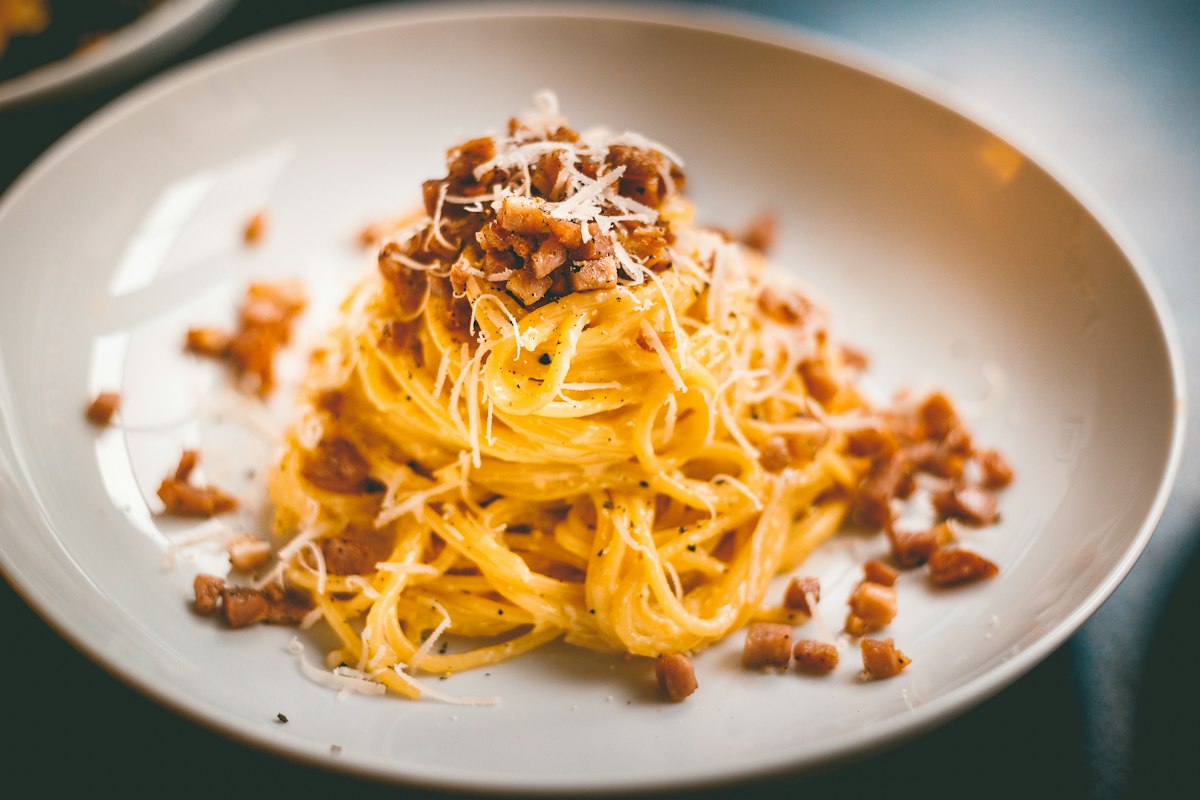
Carbonara is four ingredients and one technique, and the technique is temperature control. The sauce is an emulsion of egg yolk, cheese and rendered pork fat, loosened with starchy pasta water; take it above roughly 160F and the yolk scrambles. So the pan comes off the heat before the eggs go in, and the residual warmth of the pasta does the rest. Cream is not in the dish and never was: it is a shortcut that papers over a broken emulsion.
Watch
Video coming soon
How to make Spaghetti Carbonara
Ingredients
Quantities scale automatically. Cooking times stay the same.
The four ingredients
To finish
Equipment
- Large pot
- Large skillet
- Mixing bowl
- Microplane or fine grater
Method
-
1
Boil the pasta
Bring a large pot of well-salted water to a boil and cook the spaghetti to one minute short of the package time. Salt the water less than usual, because the guanciale and pecorino both bring a lot.
-
2
Render the guanciale
Put the guanciale in a cold, dry skillet and set it over medium-low heat. Starting cold renders the fat slowly instead of burning the outside. Cook 8-10 minutes until the fat is translucent and the edges are crisp, then take the pan off the heat.
-
3
Make the egg and cheese paste
In a bowl, whisk the yolks, whole egg, pecorino and black pepper into a thick paste. It should look like wet sand rather than a liquid; the cheese is doing structural work here.
-
4
Temper the eggs
Whisk two or three tablespoons of hot pasta water into the egg mixture, a little at a time. This warms it gently so it does not seize when it meets the pasta.
-
5
Combine off the heat
Drain the pasta, reserving a large mug of water, and tip it into the skillet with the rendered fat. Toss to coat, wait 30 seconds for the pan to cool slightly, then pour in the egg mixture and toss hard and continuously.
-
6
Loosen and serve
Add pasta water a splash at a time, tossing all the while, until the sauce turns glossy and coats every strand. Serve immediately with more pecorino and pepper; carbonara waits for nobody.
Cook’s tips
- Take the pan off the heat before the eggs go in. Almost every scrambled carbonara comes from adding them to a pan still on the burner.
- Grate the pecorino as finely as you can. Coarse shreds refuse to melt into the emulsion and leave stringy clumps.
- Keep more pasta water than you think you need. The sauce tightens as it cools on the plate, so it should look slightly loose in the pan.
Variations
- Pancetta is the usual substitute for guanciale, and streaky bacon works at a push, though both are leaner and less sweet.
- Cacio e pepe is the same dish without the pork or egg: just pecorino, pepper and pasta water.
- For a vegetarian version, render cubes of smoked firm tofu or use browned butter in place of the pork fat.
Storage and make-ahead
Carbonara must be eaten immediately; the emulsion breaks as it cools and cannot be brought back. Leftovers keep a day in the fridge and are best refried into a frittata-style cake rather than reheated as pasta.
Nutrition per serving
| Calories | 612 kcal |
|---|---|
| Protein | 27 g |
| Carbohydrates | 66 g |
| Fat | 26 g |
| Fibre | 3 g |
| Sugar | 3 g |
| Sodium | 780 mg |
Nutrition is estimated from ingredient averages and will vary with brands and portioning.