Slow-Simmered Spaghetti Bolognese
A patient meat ragu built on a proper soffritto, milk and a two-hour simmer, for a sauce that coats pasta instead of sitting on it.
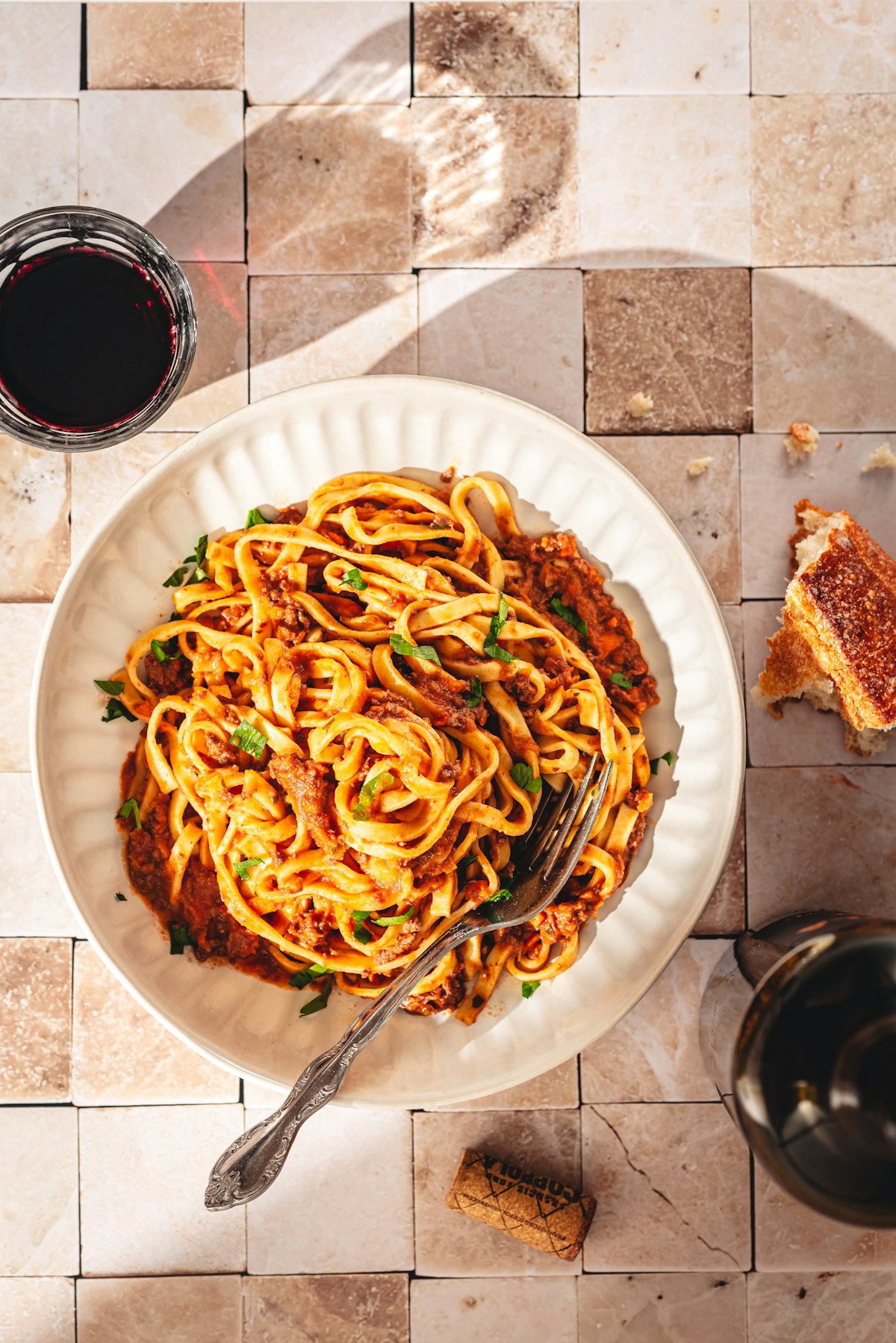
A ragu is mostly a lesson in not hurrying. The soffritto needs fifteen minutes to sweeten, the meat needs to brown in batches rather than steam in a crowded pan, and the sauce needs two hours at a bare simmer for the connective tissue to break down and the flavours to fuse. The milk, added before the wine, is the step people skip and the one that makes the texture. Note that in Bologna this sauce is served with tagliatelle, not spaghetti; we call it what most people search for, but the wider noodle genuinely holds it better.
Watch
Video coming soon
How to make Slow-Simmered Spaghetti Bolognese
Ingredients
Quantities scale automatically. Cooking times stay the same.
For the soffritto
For the ragu
To serve
Equipment
- Heavy casserole or Dutch oven
- Large pot
- Wooden spoon
- Sharp knife
Method
-
1
Sweat the soffritto
Heat the oil and butter in a heavy casserole over medium-low. Add the pancetta and cook until its fat renders, then add the onion, carrot and celery with a pinch of salt. Cook gently for 15 minutes, stirring now and then, until everything is soft and sweet with no colour.
-
2
Brown the meat
Raise the heat to medium-high and add the beef and pork in two batches, breaking them up and letting each batch sit long enough to catch and brown properly. Crowding the pan makes the meat release water and boil grey, which costs you most of the flavour.
-
3
Add the milk
Pour in the milk and simmer, stirring, until it has almost entirely evaporated, around 8-10 minutes. This tenderises the meat and gives the finished ragu its rounded texture, and it must go in before anything acidic.
-
4
Deglaze with wine
Add the wine and scrape the base of the pan clean. Let it bubble until the sharp alcohol smell has gone and the liquid has reduced by about half.
-
5
Build and simmer
Stir in the tomato paste and cook it for 2 minutes, then add the crushed tomatoes, stock, bay leaf and salt. Bring to a bare simmer, partially cover, and cook for at least 2 hours on the lowest heat, stirring every 20 minutes and adding a splash of stock if it looks dry. It is ready when the fat separates and glosses the surface.
-
6
Season and serve
Fish out the bay leaf, then season with black pepper, a scrape of nutmeg and more salt to taste. Cook the pasta 1 minute short of the package time, drain reserving a mug of water, and toss it directly into the sauce with a splash of that water until it coats every strand. Serve with parmesan.
Cook’s tips
- Cut the soffritto vegetables far smaller than feels necessary, around 1/8 inch. They are meant to dissolve into the sauce rather than turn up as pieces of carrot.
- Never boil a ragu. You want the occasional lazy bubble; a rolling simmer toughens the meat and reduces the liquid before the collagen has broken down.
- Toss the pasta in the sauce in the pan rather than ladling sauce over a plate of naked spaghetti. Thirty seconds of tossing with a little pasta water is what makes the sauce cling.
Variations
- Add a parmesan rind to the pot during the simmer and remove it at the end for extra savoury depth.
- Replace 4 oz of the beef with chicken livers, finely chopped, for a richer traditional ragu.
- Use the same sauce layered with bechamel and pasta sheets for a straightforward lasagne.
Storage and make-ahead
Refrigerate for up to 4 days and freeze for 3 months; this is a sauce that is better on day two than on the day it is made. Cool it quickly, portion it, and reheat gently with a splash of stock or water to loosen. Always cook the pasta fresh.
Nutrition per serving
| Calories | 648 kcal |
|---|---|
| Protein | 36 g |
| Carbohydrates | 63 g |
| Fat | 26 g |
| Fibre | 6 g |
| Sugar | 10 g |
| Sodium | 710 mg |
Nutrition is estimated from ingredient averages and will vary with brands and portioning.