Greek Moussaka
Layers of roasted aubergine and cinnamon-scented lamb under a thick baked bechamel, rested until it slices clean.
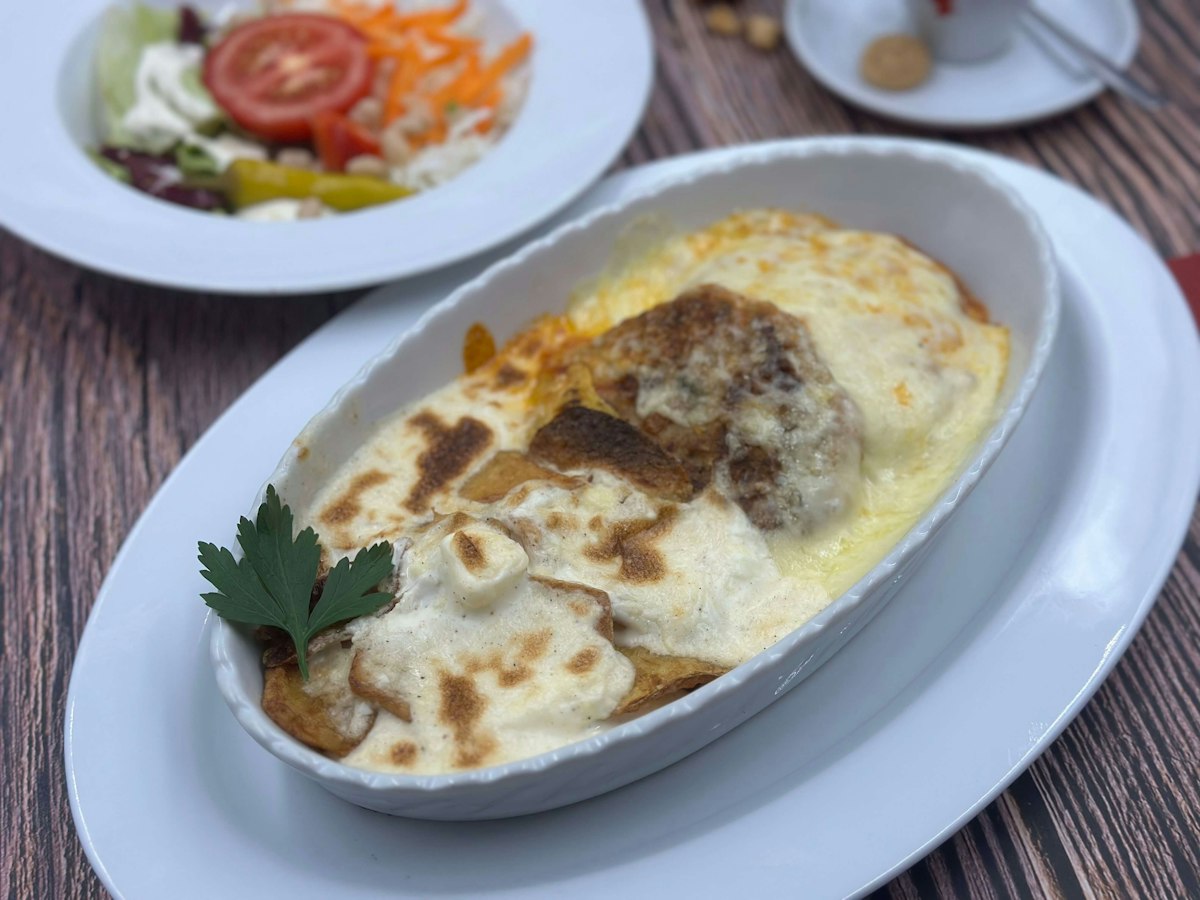
Two habits separate a good moussaka from a greasy one. The aubergine is roasted rather than fried, because aubergine absorbs frying oil like a sponge and gives almost none of it back. And the bechamel is made deliberately thick and enriched with egg yolk, so it sets into a proper custard layer instead of running off the plate. The third thing is patience: it needs a full thirty minutes out of the oven before you cut it, or it will slump.
Watch
Video coming soon
How to make Greek Moussaka
Ingredients
Quantities scale automatically. Cooking times stay the same.
For the aubergine
For the lamb
For the bechamel
Equipment
- Two large baking trays
- Large skillet
- Heavy saucepan
- 9x13 inch baking dish
- Whisk
Method
-
1
Roast the aubergine
Heat the oven to 425F / 220C. Brush the rounds on both sides with olive oil, season with the salt, and spread them over two trays in a single layer. Roast 25-30 minutes, turning once, until golden and collapsing. Roasting rather than frying is what keeps this dish out of grease.
-
2
Start the lamb
Meanwhile, heat the oil in a large skillet and cook the onion for 8 minutes until soft. Add the garlic for a minute, then the lamb, breaking it up and letting it brown properly rather than steam. Pour off the fat if there is a lot.
-
3
Simmer the sauce
Stir in the tomato paste and cook 2 minutes, then add the wine and let it reduce by half. Add the tomatoes, cinnamon, allspice, bay, oregano and seasoning. Simmer 20-25 minutes until thick and almost dry; a wet lamb layer makes a soggy moussaka.
-
4
Make a thick bechamel
Melt the butter in a saucepan, whisk in the cornflour and cook 1 minute. Add the warm milk in a slow stream, whisking hard, and cook 5-6 minutes until very thick. Off the heat, beat in the yolks one at a time, then the cheese, nutmeg and seasoning.
-
5
Layer it
Lower the oven to 350F / 180C. Lay half the aubergine in the dish, spread over all the lamb, then the remaining aubergine. Pour the bechamel over and smooth it flat to the edges so it seals the top.
-
6
Bake and rest
Bake 40-45 minutes until deeply golden and set with only a slight wobble at the centre. Rest for at least 30 minutes before cutting. This is not optional; cut it hot and it will slide apart on the plate.
Cook’s tips
- Salting the aubergine is unnecessary with modern varieties, which are not bitter. Roasting them dry is what matters.
- The lamb layer should look almost too dry in the pan. It picks up moisture from the aubergine as it bakes.
- Cornflour rather than wheat flour keeps this gluten-free and gives a slightly cleaner, firmer set. Plain flour works if you do not need that.
Variations
- Add a layer of thinly sliced par-boiled potato on the base, which is common in many Greek households.
- Use minced beef, or a half-and-half mix of beef and lamb, for a milder result.
- For a vegetarian version, replace the lamb with brown lentils and finely chopped mushrooms cooked the same way.
Storage and make-ahead
Refrigerate for up to 4 days; it slices far better cold and reheats well, covered, at 325F / 160C for 25 minutes. It can be assembled a day ahead and baked from cold with an extra 15 minutes. Freezes for 3 months, baked or unbaked.
Nutrition per serving
| Calories | 648 kcal |
|---|---|
| Protein | 34 g |
| Carbohydrates | 29 g |
| Fat | 44 g |
| Fibre | 7 g |
| Sugar | 12 g |
| Sodium | 780 mg |
Nutrition is estimated from ingredient averages and will vary with brands and portioning.