Cooking guide · 8 min read
Why Your Cooking Tastes Flat (And the Four Fixes)
Salt, acid, fat and heat are the four levers behind almost every flavour problem. Here is how to diagnose which one is missing.
You follow the recipe exactly and it comes out tasting like a rough draft of what it should be. This is the most common experience in home cooking, and it almost always resolves to one of four variables being wrong.
Fix one: salt, and when you add it
Undersalting is the most frequent cause by a wide margin, and the timing matters as much as the quantity. Salt added early penetrates and seasons from within; salt added at the end sits on the surface and reads as sharp rather than integrated.
Salt in layers: a pinch when the onions go in, again when the liquid is added, and a final adjustment at the end. A soup salted only at the end will always taste less complete than one salted three times along the way, even at identical total quantities.
Fix two: acid
If a dish is adequately salted and still tastes heavy or dull, it needs acid. Lentils, beans, soups, stews, rich sauces and anything with a lot of fat all flatten without it. A squeeze of lemon or a splash of vinegar at the end lifts everything and, crucially, does not make the dish taste sour if the quantity is right.
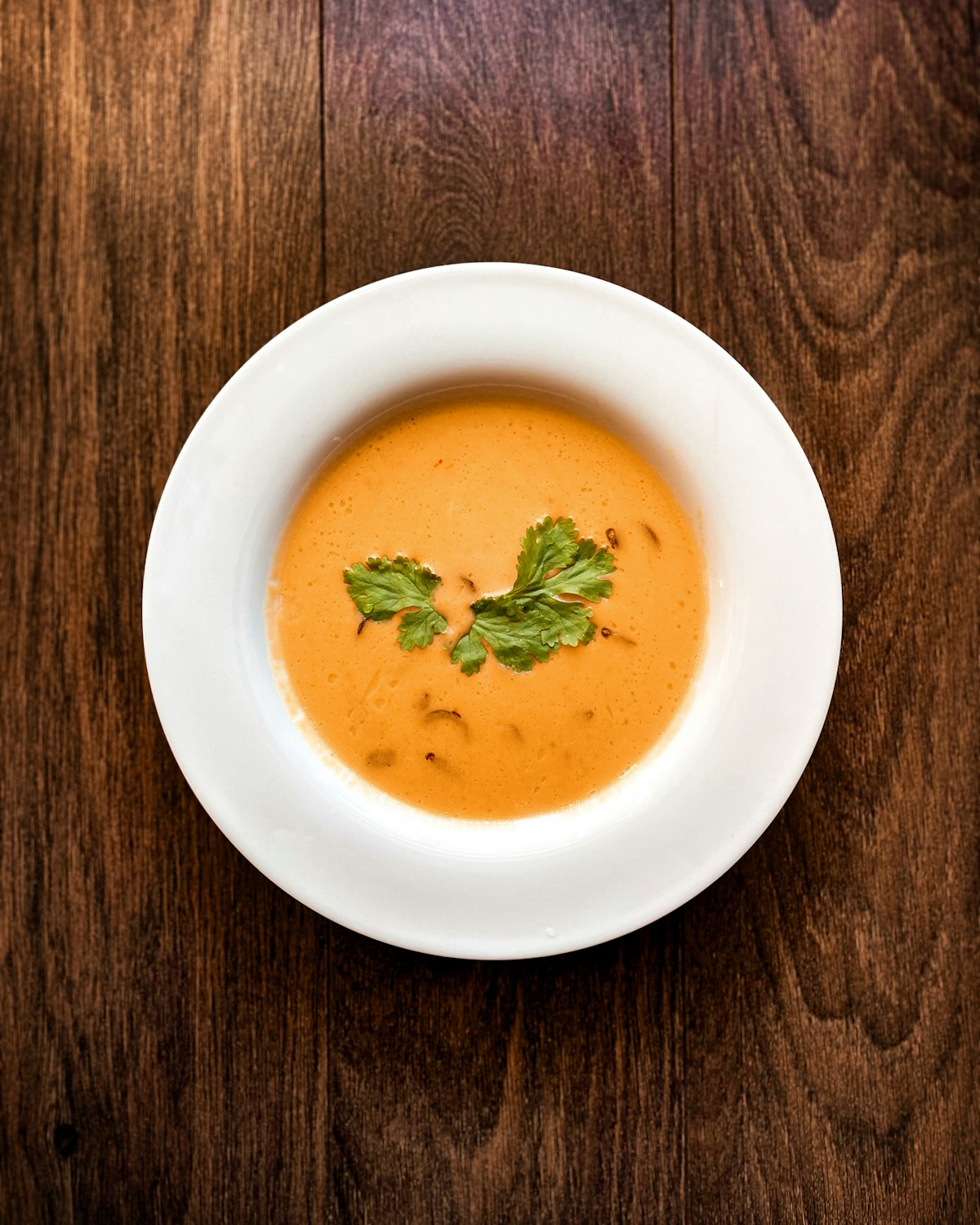
This is the most under-used lever in home cooking. If you take one thing from this guide, finish your next pot of soup with lemon juice and taste before and after.
Fix three: fat
Fat carries flavour compounds that water cannot, and it coats the tongue so taste lingers rather than vanishing. A dish that tastes thin and short often needs a knob of butter, a swirl of olive oil or a spoon of yogurt at the end.
This is why finishing pasta with butter and cheese off the heat transforms it, and why a drizzle of good olive oil over a finished soup is not decoration.
Fix four: browning
The Maillard reaction produces hundreds of flavour compounds that simply do not exist in unbrowned food. If your stew tastes flat despite correct seasoning, the likely cause is that the meat was crowded and steamed rather than seared, or that the tomato paste was never caramelised.
- Dry the surface of anything you want to brown. Wet food steams.
- Do not crowd the pan; cook in batches even though it takes longer.
- Let food sit undisturbed. Browning requires sustained contact with hot metal.
- Cook tomato paste for two full minutes until it darkens before adding liquid.
A diagnostic order
When something tastes wrong, run through them in sequence, tasting after each: add salt first, because it is most often the answer. Then acid. Then fat. If all three are correct and it still tastes flat, the problem happened earlier, at the browning stage, and cannot be fixed at the end.
The one that cannot be corrected late
Salt, acid and fat can all be adjusted at the end of cooking. Browning cannot. This is why recipes insist on searing properly and on caramelising the paste, and why skipping those steps produces a dish that is impossible to rescue no matter how much you season it.